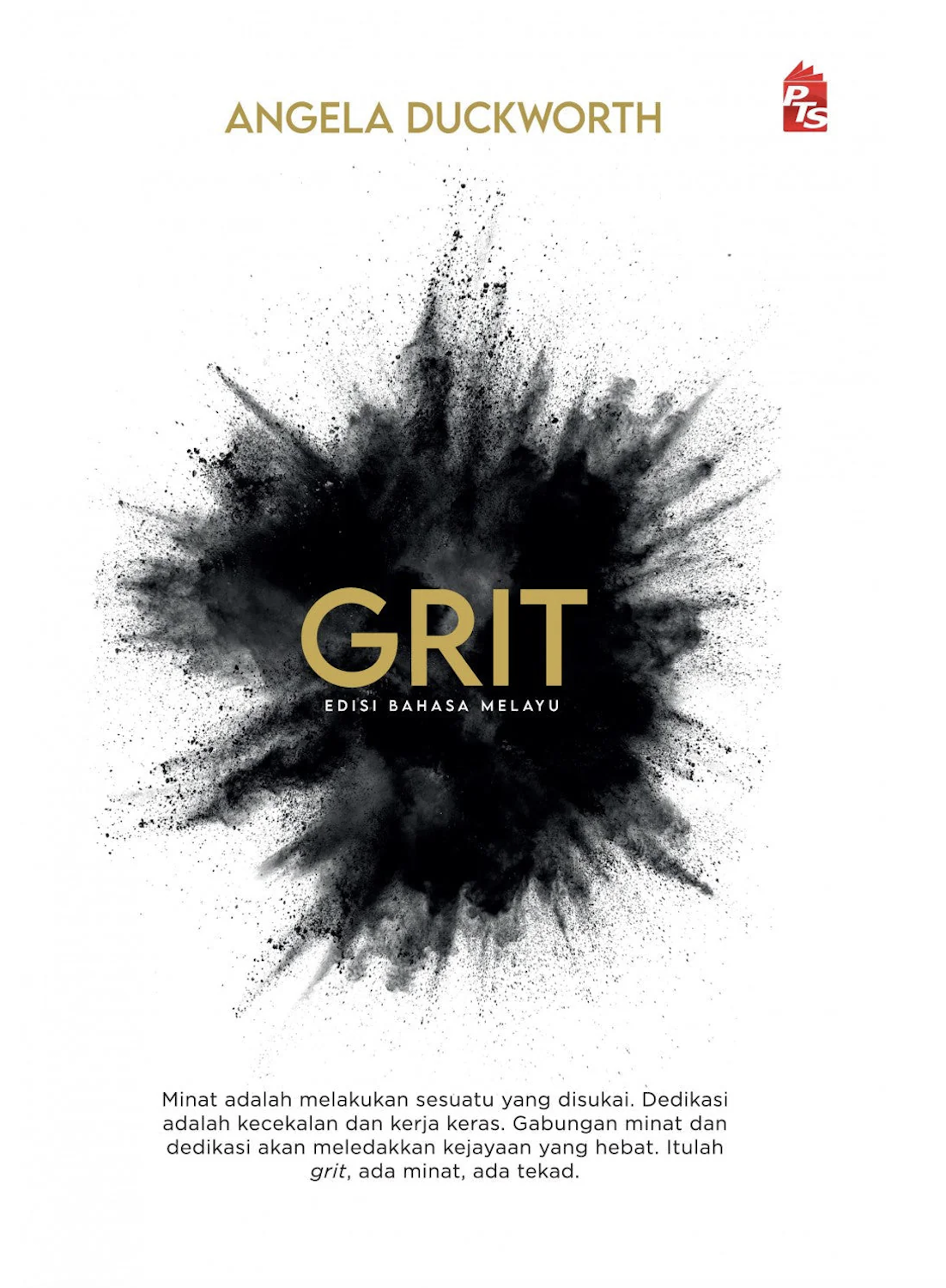
Sinopsis
It proves that hard work and passion matter much more than natural talent. The book gives you a clear blueprint to build mental toughness. By using easy tools like goal mapping, it helps you focus your daily habits and clear out distractions. Ultimately, Grit shows that anyone can grow by choosing to see mistakes as simple chances to practice and improve.
| Nombor Buku | 158.1/DUC |
|---|
| Tempat Terbitan | New York |
|---|
| Penerbit | Scribner |
|---|
| Ukuran Tinggi Buku | 9781501111105 |
|---|
Sasaran Biblioterapi
| Bil |
Sasaran |
Bukti Isi Buku |
| 1 |
High achievers, corporate leaders, educators, athletes, parents, and ambitious professionals |
Duckworth builds her data by explicitly testing subjects across highly demanding, diverse landscapes. This includes analyzing cadets weathering "Beast Barracks" at the West Point Military Academy, spelling bee champions, corporate sales teams, and elite athletes, proving the book targets those striving for peak performance. |
Perkembangan Diri
| Bil |
Perkembangan |
Bukti Isi Buku |
| 1 |
The "Effort Counts Twice" Framework |
The book provides mathematical proof of skill development through the formulas. This provides readers with a powerful cognitive reframe, shifting them from passive dependency on innate talent to an empowered, active focus on their personal work ethic. |
| 2 |
The Goal Hierarchy Matrix |
Duckworth provides an executive blueprint for organizing personal objectives into low-level, mid-level, and a singular, abstract top-level goal. Tracking this architecture acts as a literal tool for personal development, allowing readers to audit their daily schedules, eliminate conflicting tasks, and align their actions with their true values. |
| 3 |
The Four Internal Assets |
The book provides a clear roadmap for self-improvement by breaking down the four psychological pillars of grittiness: Interest, Practice, Purpose, and Hope. Through scientific concepts like Carol Dweck's Growth Mindset and the mechanics of Deliberate Practice, the text proves that readers can systematically train their minds to view setbacks as opportunities for learning rather than permanent defeats. |