Sinopsis
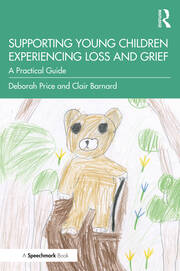
Supporting Young Children Experiencing Loss and Grief provides early years practitioners and Key Stage1 teachers with practical advice to support children experiencing feelings related to change and loss. Using key case studies and interviews with children and adults, this important text uncovers best-practice techniques to help children talk about their feelings. Covering more than bereavement,it considers the loss children feel when they move home, undergo a change in routine, experience their parents' or carers' separation, move settings or lose contact with a close friend, nursery practitioner or teacher. Providing answers to the key question of how to support children who have feelings of loss and grief, Supporting Young Children Experiencing Loss and Grief is a must-read text for all those working with young children in caring environments who are looking to provide children with the tools they need to talk about their emotions.
| Nombor Buku | 155.937083 |
|---|
| Tempat Terbitan | Abingdon, Oxon ; New York, NY |
|---|
| Penerbit | Routledge, Taylor & Francis Group |
|---|
| Ukuran Tinggi Buku | 9780367422974 |
|---|
Sasaran Biblioterapi
| Bil |
Sasaran |
Bukti Isi Buku |
| 1 |
Early childhood educators |
The literal title, Supporting Young Children Experiencing Loss and Grief, explicitly identifies the book as a professional and caregiving guide rather than a standalone children's storybook. It targets adults who have the structural capability to build basic social and emotional learning (SEL) spaces for grieving youth. |
Perkembangan Diri
| Bil |
Perkembangan |
Bukti Isi Buku |
| 1 |
Expansion of Loss Literacy Beyond Bereavement |
The book trains adults to recognize that children experience grief not just from death, but from broader life disruptions like moving homes, changes in routine, parental separation, or losing contact with a favourite teacher. Elevating the reader’s awareness to look for grief in everyday transitions provides self-development by fundamentally altering and sharpening their diagnostic gaze as a caregiver. |
| 2 |
Mastery of Practical "Best-Practice" Dialogue Techniques |
Through real-world case studies and detailed interviews, the book provides structural blueprints that teach adults how to safely invite and navigate conversations about big emotions. Implementing these communication strategies directly develops the adult's own emotional vocabulary and conversational confidence, transforming them from an anxious observer into a skilled facilitator of healing dialogues. |
| 3 |
Application of Collaborative Therapeutic Toolkits |
The guide pushes practitioners and teachers to actively build a toolkit of intervention strategies within educational and caring environments. By learning to design these protective micro-environments, the adult reader develops strategic professional resilience, moving away from a passive approach to an active stance equipped with tangible tools to foster a child's psychological recovery. |