Sinopsis
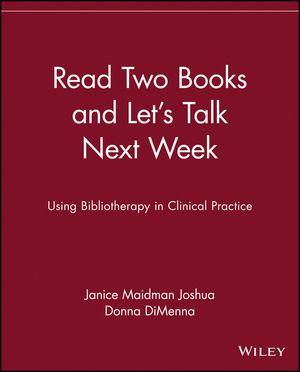
Read Two Books and Let's Talk Next Week: Using Bibliotherapy in Clinical Practice by Janice A. Rubin functions as an indispensable, scientifically grounded manual that elevates reading from a passive pastime into a rigorous, interactive clinical intervention for Coping & Resilience. Targeted at mental health professionals and clinical interns, the text offers 3 key developmental supports: it trains clinicians to transition from casual book recommendations to formal clinical applications, provides techniques to overcome patient resistance, and instructs on the ethical integration of literature into therapy models.
| Nombor Buku | 616.89/JOS |
|---|
| Tempat Terbitan | New York |
|---|
| Penerbit | John Wiley & Sons |
|---|
| Ukuran Tinggi Buku | 0471375659 |
|---|
Sasaran Biblioterapi
| Bil |
Sasaran |
Bukti Isi Buku |
| 1 |
Clinical psychologists, licensed counselors, psychiatrists, and marriage and family therapists. |
The book is filled with technical clinical jargon, diagnostic frameworks, and step-by-step instructions on how to integrate reading assignments into formal treatment plans, specifically addressing therapist-client boundaries and session timing. |
| 2 |
Graduate students in counseling or clinical psychology programs and psychiatric social workers. |
The inclusion of extensive, structured appendices featuring categorized annotated bibliographies, cross-referenced by specific DSM (Diagnostic and Statistical Manual of Mental Disorders) diagnostic categories, makes it an essential foundational training manual for clinicians-in-training. |
Perkembangan Diri
| Bil |
Perkembangan |
Bukti Isi Buku |
| 1 |
Mastery of Prescriptive Treatment Calibration |
The text teaches the practitioner how to move away from guessing and systematically match a client's specific psychological pathology (such as clinical depression or acute anxiety) with precise literary themes. Developing this ability to strategically prescribe books enhances the clinician's diagnostic accuracy and professional efficacy. |
| 2 |
Enhancing Clinical Communication and Metaphorical Literacy |
The book provides blueprints that show therapists how to use a character's fictional journey as a safe third-party canvas to talk about sensitive issues. Mastering this technique expands the practitioner's communication skills, letting them bypass a client's psychological defenses without causing emotional distress or resistance. |
| 3 |
Structuring Post-Reading Therapeutic Dialogue |
The guide outlines exact questioning protocols to move a client from passive reading to active, conscious insight during a session. Learning to facilitate these deeper reflections builds the professional's clinical competence, turning a simple book discussion into an intentional catalyst for a client's cognitive and behavioral change. |