Sinopsis
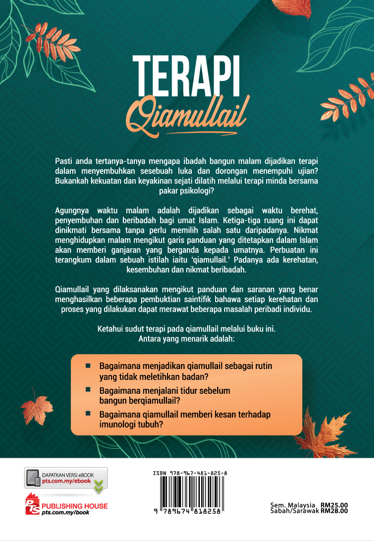
"Terapi Qiamullail" by Ustazah Datuk Dr. Norhafizah Musa and Ustaz Hamid Addin, demonstrating how the Islamic practice of night vigil serves as an emotional, mental, and physical sanctuary. The book masterfully counters the assumption that psychological recovery is strictly found in conventional therapy, instead positioning the night as an intentional ecosystem for healing, rest, and divine realignment. By beautifully integrating spiritual guidelines with scientific validation—such as how nighttime devotion strengthens biological immunity and relieves internal fatigue—the authors offer a structured, reassuring blueprint for individuals seeking to transform their overwhelming, silent hardships into a dynamic source of long-term fortitude and mental clarity.
| Nombor Buku | 297.382 |
|---|
| Tempat Terbitan | Batu Caves, Selangor |
|---|
| Penerbit | PUBLISHING HOUSE SENDIRIAN BERHAD |
|---|
| Ukuran Tinggi Buku | 9789674818258 |
|---|
Sasaran Biblioterapi
| Bil |
Sasaran |
Bukti Isi Buku |
| 1 |
Individuals Dealing with Deep Emotional Wounds and Life Obstacles |
The book explicitly targets those navigating personal crises, grief, or brokenness. This is proven by the text's core question to the suffering reader: "mengapa ibadah bangun malam dijadikan terapi dalam menyembuhkan sesebuah luka dan dorongan menempuhi ujian?" (why the worship of waking up at night is used as therapy in healing a wound and an encouragement to pass life tests?). |
| 2 |
People Facing Severe Mental Exhaustion, Loneliness, or Burnout |
The narrative addresses individuals overwhelmed by daily life pressures who need to reset. This is proven by the book's direct objective to reframe the night for the fatigued: "kongsikan bagaimana bangun malam boleh jadi ruang terapi untuk tekanan, kesedihan dan kebuntuan hidup" (sharing how waking up at night can become a therapeutic space for stress, sadness, and life blockages). |
Perkembangan Diri
| Bil |
Perkembangan |
Bukti Isi Buku |
| 1 |
Growth in Somatic and Routine Discipline |
The handbook cultivates physical resilience by training readers to systematically restructure their sleep and wakefulness habits. This self-development is proven by practical strategies addressing physical capacity: "Bagaimana menjadikan qiamullail sebagai rutin yang tidak meletihkan badan? Bagaimana menjalani tidur sebelum bangun berqiamullail?" (How to make night vigil a routine that does not tire the body? How to manage sleep before waking up for night vigil?). |
| 2 |
Growth in Somatic and Immunological Healing |
The book fosters physiological recovery alongside psychological care, prompting self-improvement through a scientifically backed lens. This is proven as the text explores cellular physical growth: "Bagaimana qiamullail memberi kesan terhadap imunologi tubuh?" (How night vigil impacts the body's immunology?). |
| 3 |
Growth in Self-Soothing and Mindful Stillness |
The narrative trains readers to actively use quiet, isolated hours to process distressing emotions rather than ignoring them. This self-development is proven by the book's framework for emotional restoration: "Memulihkan hati daripada luka kehidupan dan emosi negatif [serta] menenangkan fikiran setelah seharian berdepan tekanan" (Restoring the heart from life wounds and negative emotions, as well as calming the mind after facing all-day pressures). |


.jpg)