Sinopsis
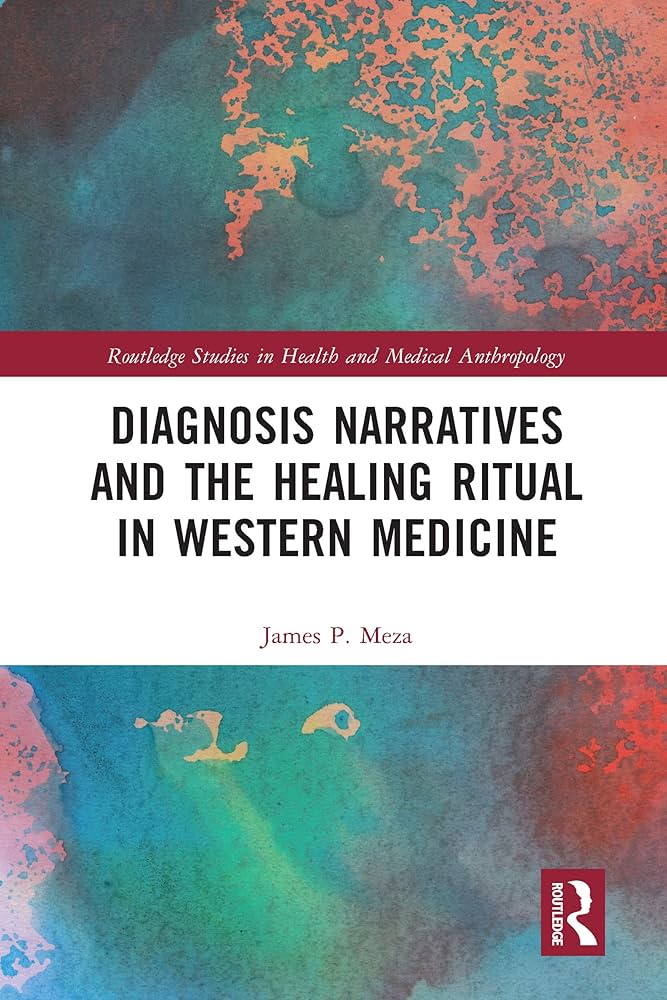
"Diagnosis Narratives and the Healing Ritual in Western Medicine" by James Peter Meza is an insightful medical anthropology, demonstrating how clinical healing reaches far beyond a single body to require the restorative restructuring of an individual's role within their broader social network. Using a novel combination of narrative theory and cognitive anthropology, the book reframes the medical consultation as an active cultural ritual where diagnosing a disease serves to legally and socially validate human suffering. By analyzing the dialogue shared during medical encounters, Meza provides a practical framework showing how rewriting one’s health narrative helps mend the deep existential disruptions caused by illness or death, ultimately guiding readers to use structured communication to rebuild their fractured relationship with society.
| Nombor Buku | 306.461 |
|---|
| Tempat Terbitan | London |
|---|
| Penerbit | Routledge |
|---|
| Ukuran Tinggi Buku | 9781138631427 |
|---|
Sasaran Biblioterapi
| Bil |
Sasaran |
Bukti Isi Buku |
| 1 |
Scholars and Practitioners of Medical Anthropology and Narrative Medicine |
The text explicitly challenges traditional researchers and clinicians to look past isolated individual symptoms. This is proven by the book's stated aim to provide a "valuable contribution in a field where ethnographic records related to medical clinical encounters are scarce," making it highly useful to "scholars of medical anthropology and those interested in narrative medicine". |
| 2 |
Individuals Feeling Socially Disconnected Due to Chronic Illness or Trauma |
The book provides deep comfort for patients whose medical conditions have alienated them from their communities. This is proven by Meza's foundational premise that "the true focus of cultural healing should lie in managing the disruption of disease and death (cultural or biological) to the individual's relationship with society". |
Perkembangan Diri
| Bil |
Perkembangan |
Bukti Isi Buku |
| 1 |
Growth in Relational Integration |
The book trains readers to see that healing is an interdependent process that requires rebuilding a functional identity within a supportive community. This self-development is driven as the text teaches individuals to manage the heavy "disruption of disease... to the individual's relationship with society". |
| 2 |
Growth in Cognitive Autonomy |
The text empowers individuals to shift from being passive objects of a medical diagnosis to becoming active storytellers of their own lives. This is driven by Meza's application of "narrative theory" to show how constructing a clear health history helps individuals regain control over how their challenges are viewed by others. |
| 3 |
Growth in Existential Acceptance and Meaning-Making |
The handbook guides individuals to find realistic purpose within life’s unpredictable crises rather than getting stuck in absolute despair. This growth is modeled by the author's move away from abstract relativism toward a healthy mindset of "pragmatic realism," helping individuals face tough circumstances while preserving their mental fortitude. |